Vistaprint
How Vistaprint turned a <1% converting landing page into a 12% conversion engine — 4× the target.
The Situation
THE DIAGNOSIS — CQ SCORE
CQ Score at Audit
72 / 140 — Significant Conversion Gaps
CQ Score = mean of all dimension scores (each out of 140). Scores map to bands: 60–79 Significant Conversion Gaps · 80–94 Below Average · 95–105 Average · 106–119 Above Average · 120–140 CQ Elite.
Above-Fold Value Clarity
61/140
Hero illustration was a complex dashboard — ICP (first-time SMB owners) found it unintelligible and irrelevant
Message-to-Visitor Match
64/140
Illustrations throughout the page did not match the accompanying text — visitors couldn't scan or make sense of either
Trust Signal Presence
69/140
No customer testimonials or social proof anywhere on the page — zero validation for a risk-averse first-time buyer
CTA Hierarchy
60/140
CTAs present but not clearly differentiated — visitors unsure what action to take or what happened after clicking
Feature & Pricing Clarity
106/140
Feature list existed but pricing information was ambiguous — freemium timeline and paid tier benefits not communicated


THE SYSTEMS (1/2)
Hero & ICP Messaging — Above-Fold Overhaul
WHAT WAS WRONG
The hero section displayed a complex dashboard screenshot as its primary illustration. For a target audience of first-time SMB owners in their 40s–50s, this was immediately alienating — too technical, nothing to relate to, and no signal that this product was built for someone like them. Visitors were also trying to interact with the illustration, clicking on it expecting a demo — the static image offered nothing.
WHAT WE CHANGED
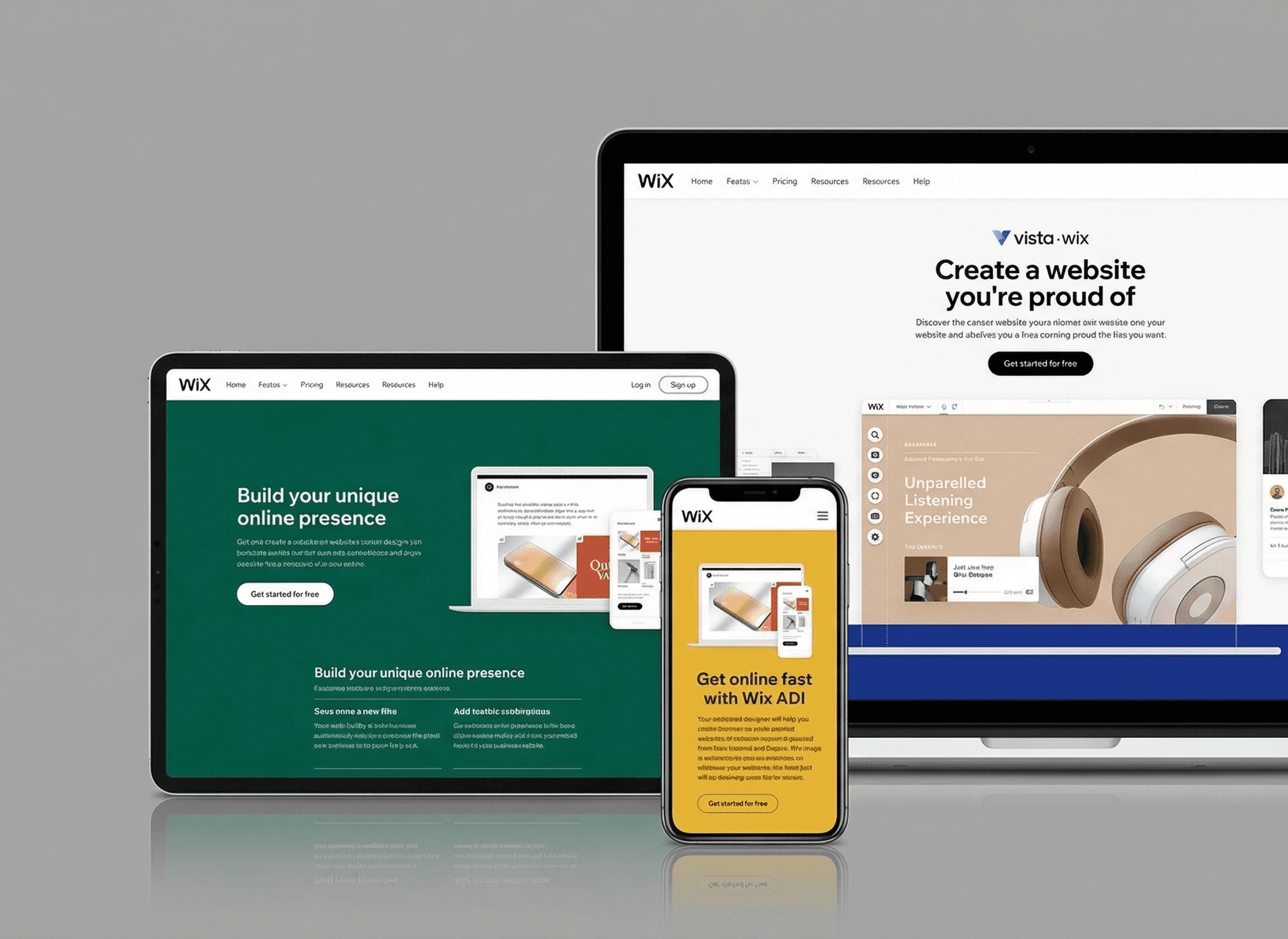
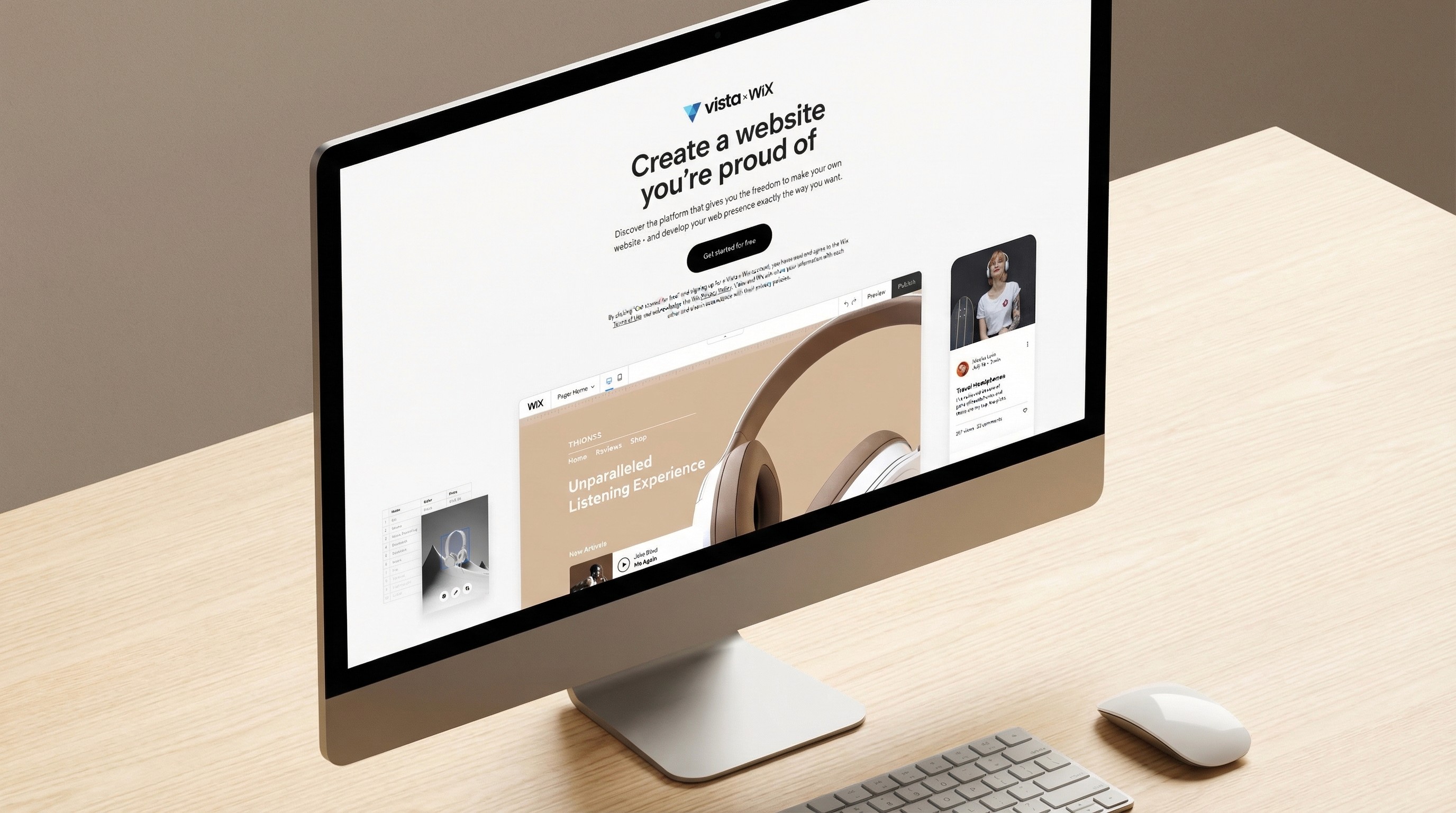
Replaced the dashboard illustration with a contextual scene: a business owner running their business through the Vistaprint platform. Same demographic as the ICP — relatable, aspirational, and immediately legible. Added the full partnership value proposition to the first fold so visitors understood the specific benefits of the Vistaprint route before scrolling — removing the 'why not just go to Wix directly?' objection at source.
WHAT WE TESTED
Hero illustration concept (dashboard view vs. business owner scene vs. product UI). Partnership value proposition placement (fold 1 vs. fold 2 vs. fold 3). Headline framing (product-led vs. outcome-led vs. audience-led).
WHAT WON
Business owner scene + partnership benefits in fold 1 + outcome-led headline. First-fold abandonment dropped significantly — visitors who previously left within seconds were now scrolling and engaging with the rest of the page.
THE SYSTEMS (2/2)
Feature Communication, Pricing Clarity & Social Proof
WHAT WAS WRONG
Features were presented as dense text blocks with illustrations that didn't match what the text described — visitors couldn't scan or understand either independently. Pricing was ambiguous: visitors knew the product had a free tier but couldn't determine when they'd need to pay, how much, or what they'd get. There were no customer testimonials anywhere — for a first-time business owner making a decision about their online presence, this was a critical missing trust signal. Template sections appeared interactive but weren't clickable — creating friction and unmet expectations.
WHAT WE CHANGED
Introduced progressive disclosure for features — communicating more information in less space, with contextual imagery directly matched to each feature description. Built a mini pricing table clearly showing the freemium structure, paid tier timing, and plan benefits side by side. Added a customer testimonials section with validated social proof from real SMB users. Made the template section fully interactive and clickable. Reduced total text volume significantly — removing copy that visitors were skipping over anyway.
WHAT WE TESTED
Feature presentation format (text-heavy vs. progressive disclosure with icons). Pricing table format (inline mention vs. dedicated mini table vs. full comparison). Testimonial placement (bottom of page vs. mid-page after pricing).
WHAT WON
Progressive disclosure + matched contextual imagery + dedicated pricing table + mid-page testimonials. This combination addressed all four of the major drop-off points identified in session recordings and heatmap analysis.

BEFORE · CQ 74
AFTER · CQ 103
Complex dashboard hero — unrecognisable to first-time SMB owners
Relatable business owner hero — ICP sees themselves in the page
Partnership value proposition absent from fold 1 — visitors leaving without understanding why
Partnership benefits front and centre in fold 1 — objection removed at source
Dense text features with mismatched illustrations — neither readable nor scannable
Progressive disclosure with contextual imagery — more features, less cognitive load
Ambiguous pricing — freemium timeline and paid benefits unclear
Mini pricing table — freemium structure, paid timing, and benefits at a glance
No social proof — zero validation for a risk-averse first-time buyer
Customer testimonials mid-page — social proof at the point of highest hesitation
Templates displayed but not interactive — unmet expectations
Interactive template section — clickable, explorable, converting
THE RESULTS
Significant Conversion Gaps
“The target was 3%. The result was 12%. What looked like a traffic problem was actually a conversion problem. Once the reasons visitors were leaving were fixed, results moved fast.”
Vistaprint
WHAT CAME NEXT
The Sprint delivered a 12× lift in conversion rate against a starting point of <1% and a target of 3%. The landing page is now the highest-converting version in the partnership's history. Opportunities identified for Phase 2 include A/B testing localised hero imagery across regional traffic segments, expanding the progressive disclosure pattern to additional feature categories, and building a dedicated landing page variant for mobile-first traffic.
Current CQ Score: